The 1st: Sawada Shuzo Co., Ltd. (Tokoname City, Aichi Prefecture)
Toji (杜氏), Tsutomu Miura
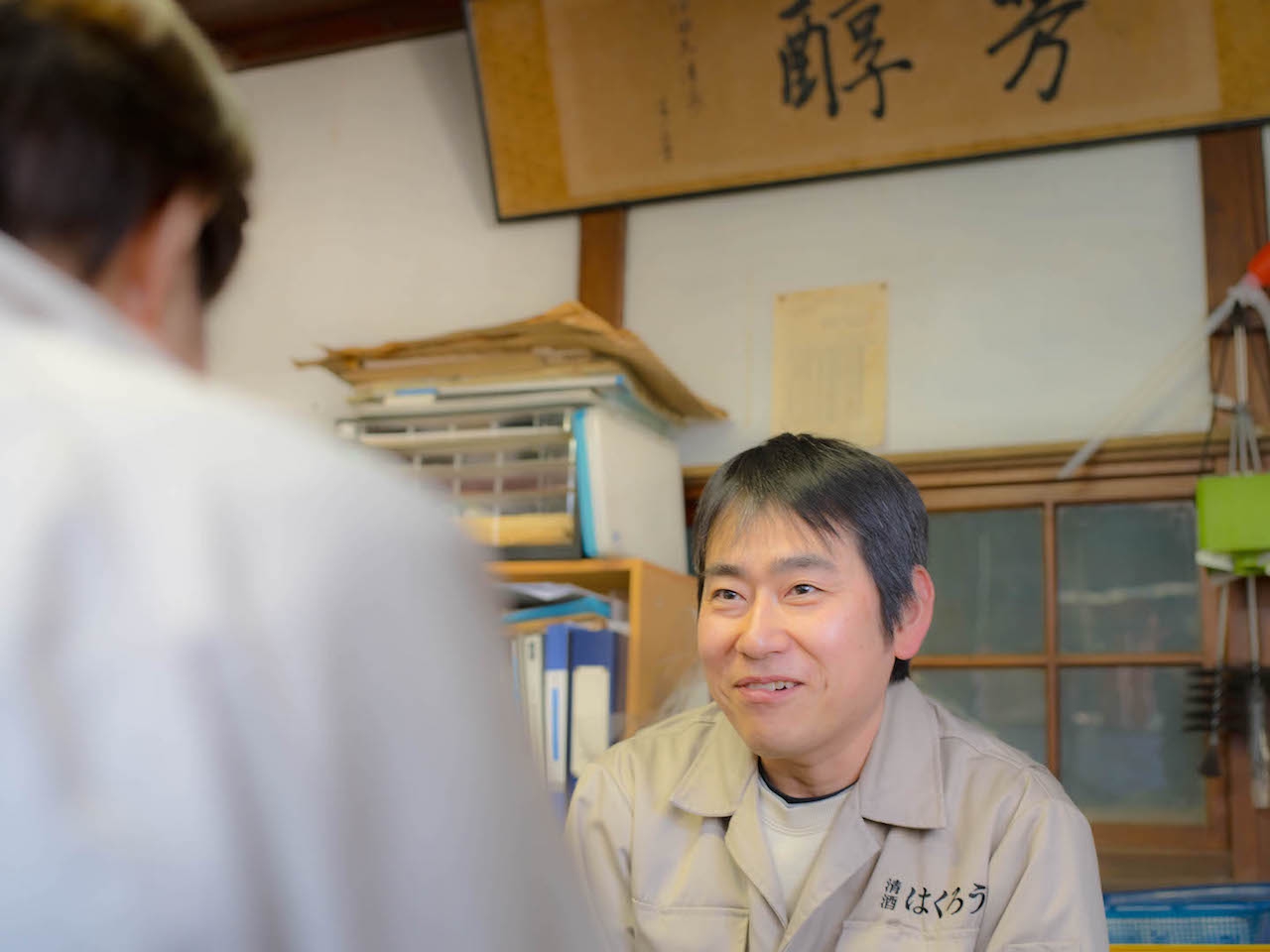
Interviewee: Toji (杜氏) Tsutomu Miura (hereafter "Miura")
Interviewer: bien — Ayako Yoshida (hereafter "bien")
bien: Alright, thank you for your time. I'd like to ask Toji Miura four questions
if I may.
First, what drew you to sake making?
Miura: In vocational school I was working with microorganisms in a bio-related field,
and a teacher from the prefecture's Food Industrial Technology Center came, and I thought sake making sounded interesting. I became interested in making things.
bien: I see. So why did you go to that school in the first place? What sparked your desire to study?
bien: Like the feel of an experiment?
Miura: Yes, that's right.
bien: My second question — what's hard about working in a brewery, in your daily work?
Miura: Hmm, the hard part is starting work early in the morning,
that sort of thing. And since it's microbial management, you have to keep a close eye on it and adjust the temperature, so that's hard too.
bien: It really is about working with living things. I heard you've continued for 22 years. Have you ever felt like "I can't take it anymore — I want to quit!"
or anything like that?
Miura: Not so far (laughs).
bien: You haven't? That's impressive (laughs). As expected!
Then the opposite — the fun part. What's your favorite part of sake making?
Miura: Well, it can be tough, but when we win an award at a competition, I think this year's brewing
went well — like the national shinshu (新酒, new sake) appraisal.
bien: Thinking of a single day's work, what do you enjoy?
Miura: As a single day?
bien: Yes, in the midst of days without rest. Winning an award is the result of that daily accumulation. Living each day, right now,
is there a joy in it? Even a small one would do.
Miura: The best is when the sake is pressed and, well, when something delicious comes out.
bien: So, for example, you mentioned you do analysis every day — is that an enjoyable time?
Miura: That part's not fun (laughs).
bien: It seems like there's change every day — "ah, this is growing well," though I can't tell myself, "ah, the acidity is coming along nicely,"
"the yeast looks good," "the koji is getting better," and so on.
Miura: Rather than the moromi (もろみ), when the koji gives off a nice aroma, I sometimes think "well, that might be good."
Things like that.
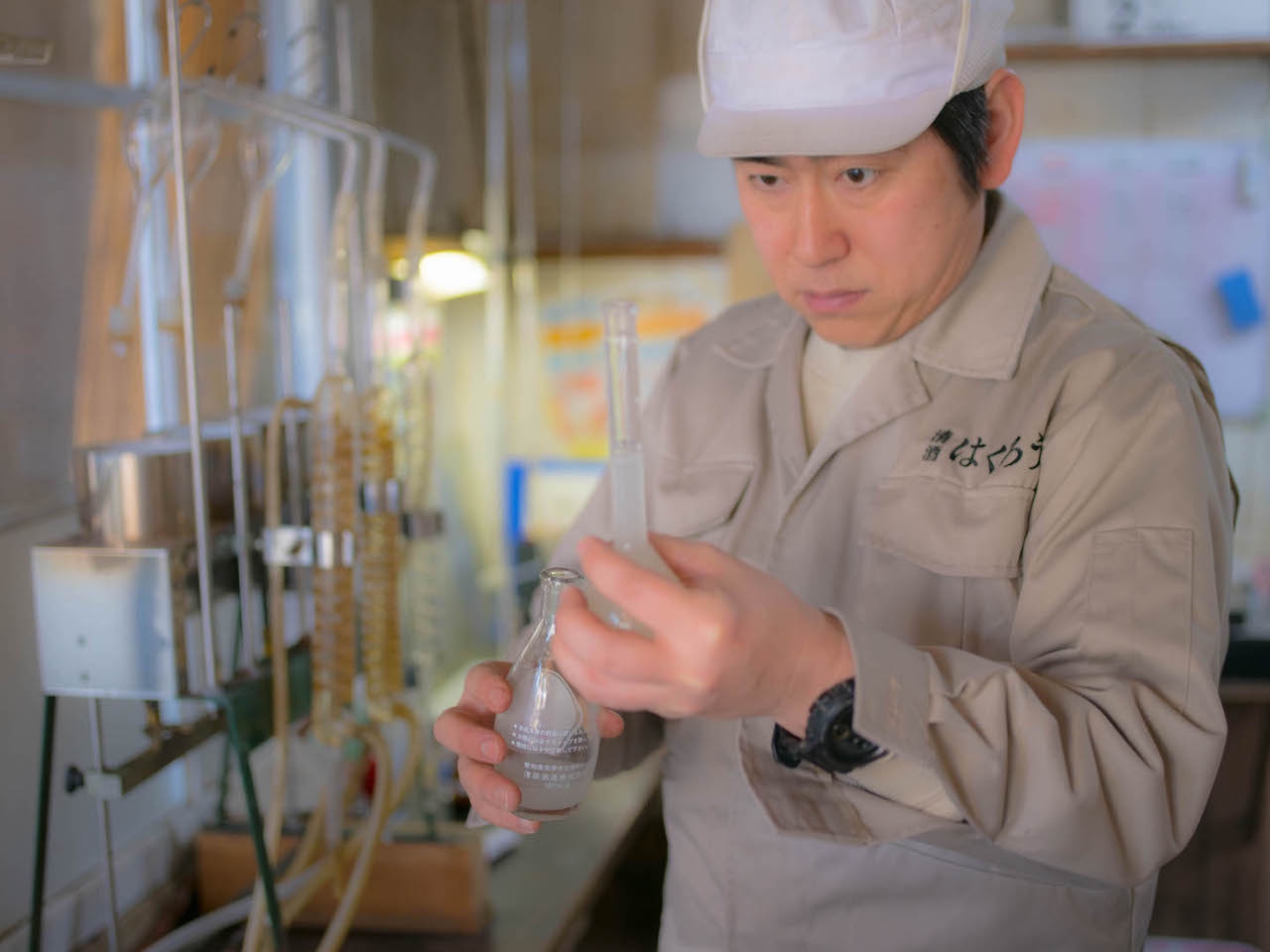
bien: It really comes down to how the koji turns out!
Miura: Above all!
bien: Does good koji give you a daily motivation boost?
Miura: I think it's good,
but when it actually becomes sake, it might turn out differently.
Since it's a daily thing, even if I think it's good, it's hard to say which factor did it.
bien: Right, I understand.
This is my last question — what do you, as Toji Miura, uniquely hold dear? What's distinctive to Hakuro?
Miura: Hmm, I'd say watching the moromi carefully and managing it properly — checking it several times a day.
bien: Moromi management, quality control. Sawada Shuzo is approaching its 170th year, and as the current toji, in the midst of what's been handed down through generations,
you're carrying on the flavor of Hakuro — the quality, that is. Beyond what's been passed down, what do you hold dear as a brand? In terms of brewing, I imagine it's quality control, but what do you feel you must protect as a motto, in your heart?
Miura: But even the old flavor has to evolve — it has to change. If it doesn't sell now, in the end...
so I think about how to make it better, how to make sake that sells better.
bien: What do you think sake that sells is?
Miura: While keeping the long-standing flavor, I'd like to make sake with a bit more sharpness, more kire. Even if the old-timers think
the flavor has changed a little.
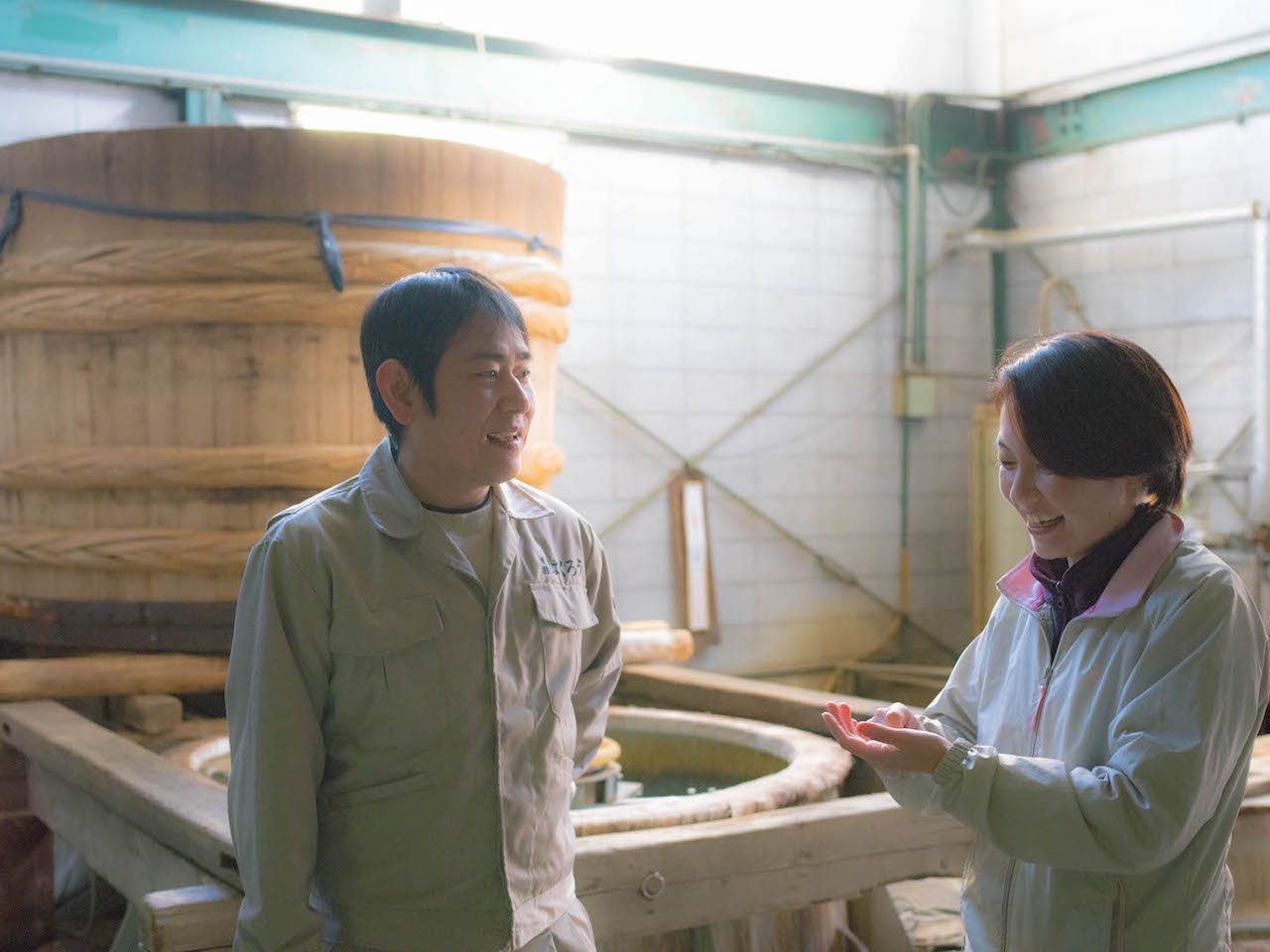
bien: Compared with other breweries, what is Hakuro proud of —
what can you say with confidence?
Miura: That we do it properly by hand
and make sake with a solid flavor.
bien: I see, and that's what sets you apart from other breweries.
Miura: I think so.
bien: As expected. Thank you very much.
Miura: Thank you very much.
The interview article with CEO Kaoru Sawada is here