Kunpaku Shuzo
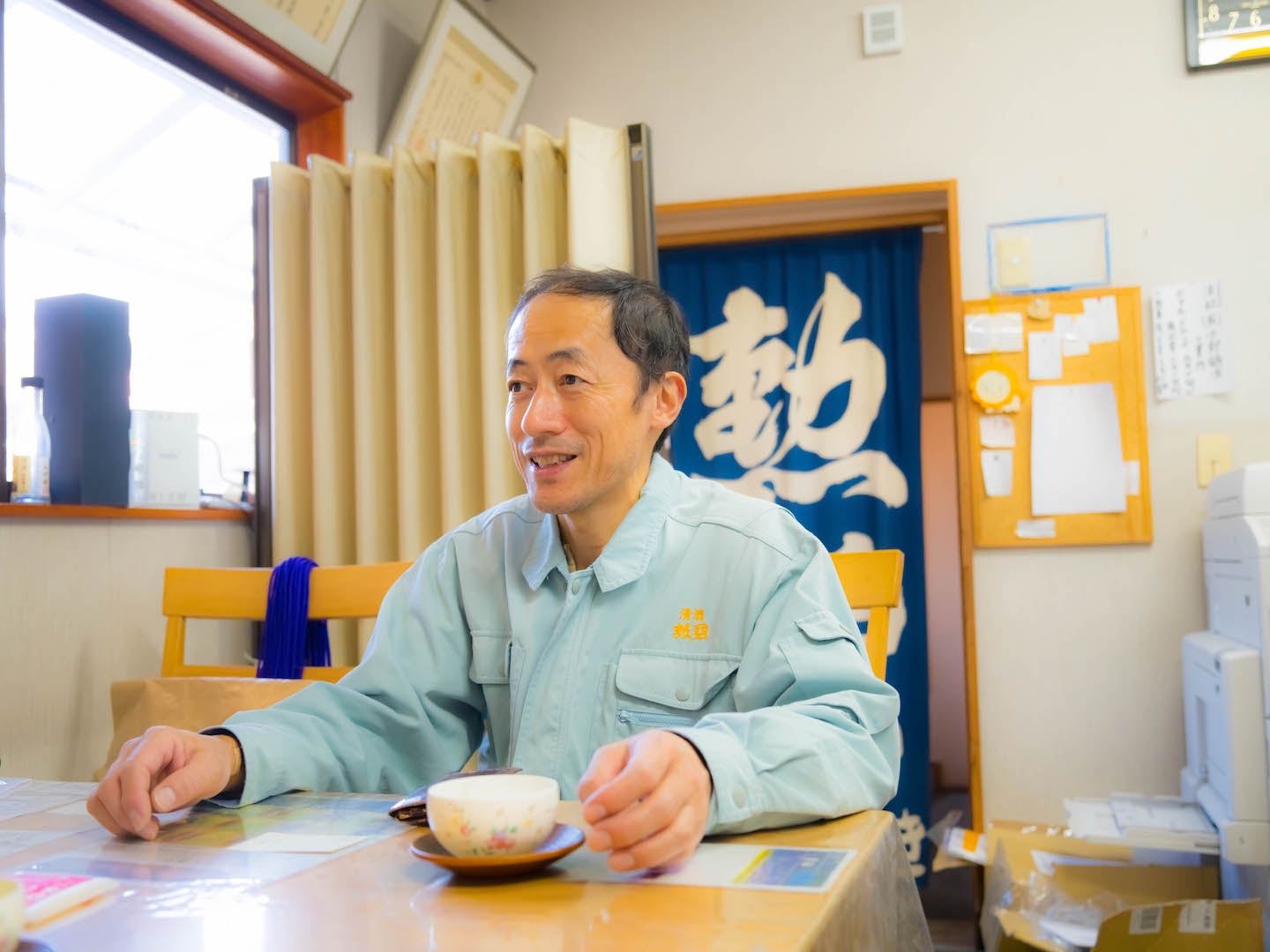
"What matters most is teamwork" President and toji (杜氏) Kimiyasu Murase
"Raise up honor, the clear azure sky — how true."
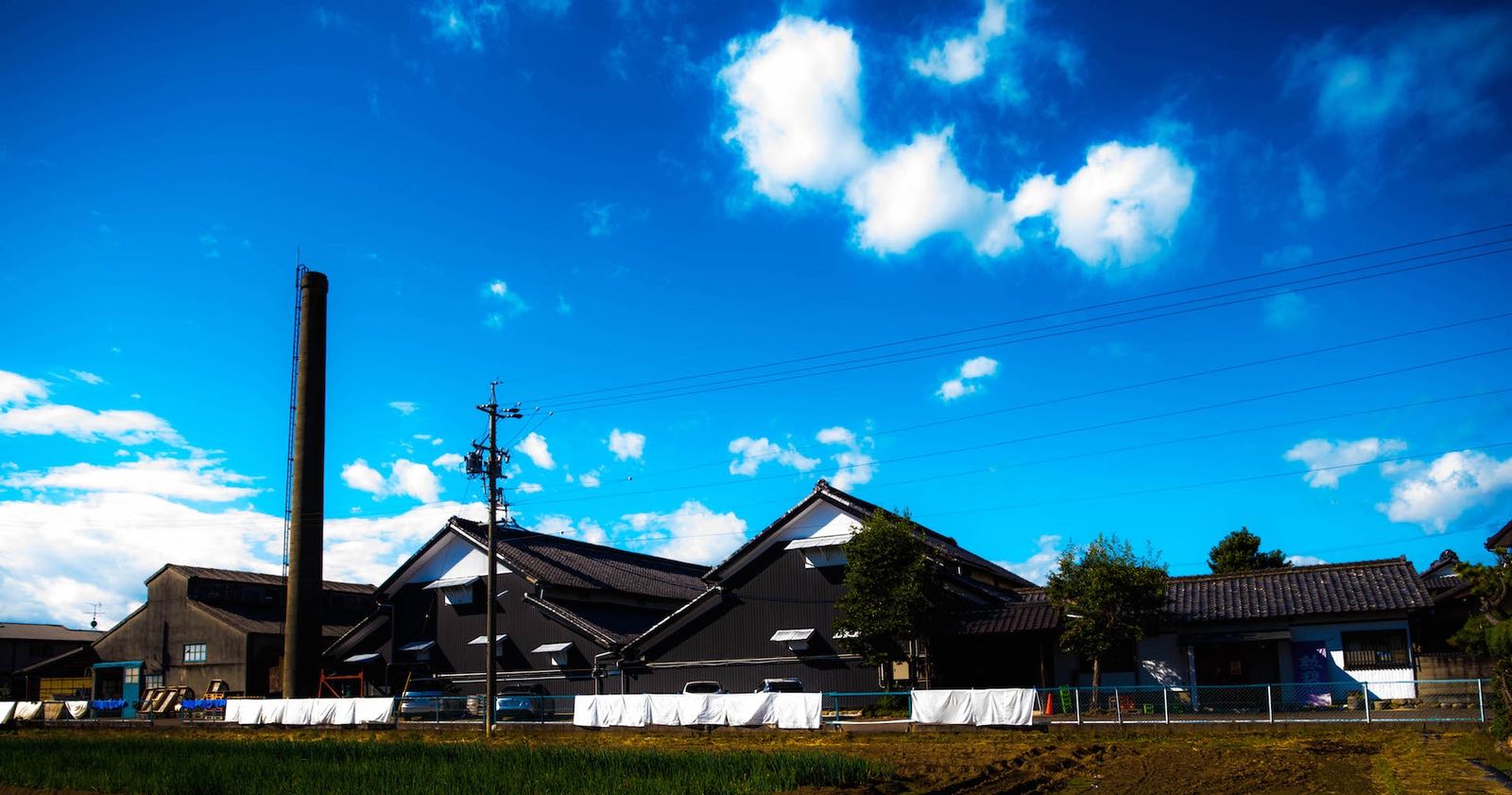
A kura (酒蔵) devoted to water and yeast. Its shikomimizu (仕込み水, brewing water) is the underground water of the Kiso River flowing 100 meters below, used entirely untreated and natural. For yeast, it uses only the No. 10 yeast, which produces a restrained, deep aroma and a profound flavor. Founded in 1915, this is a kura of Owari Konan.
Visit the website here
Interviewee: President and toji Kimiyasu Murase (hereafter Murase)
Interviewer: bien Ayako Yoshida (hereafter bien)
bien: What do you think sake is?
Murase: One of Japan's traditions and culture, I'd say.
bien: How would you like people to feel it, or how do you want to convey it as a kuramoto?
Murase: Well, the best thing is to have people see the site itself.
Elementary and junior high school students from the area often come for tours and work experience. I actively welcome that and explain as much as I can.
bien: It's real learning about tradition and culture, in the truest sense.
I think passing on this culture as part of Japanese children's early education is very important.
I hear you also often open the kura to the public.
Murase: Yes, we hold open-brewery events and tastings — the tastings are mainly for sales, though.
In mid-April we open the brewery so people can peek inside. Since we started opening it, I've realized how many people wanted to see it. Local people come, and so do people from quite far away.
I can hear the opinions and impressions of people who actually like and drink our sake,
which is encouraging.
When we first opened the brewery, even locals said they'd wanted to come, and I learned for the first time that they were interested.
bien: That's wonderful. Hearing real voices is truly encouraging. And fans increase too.
Murase: I think they have.
bien: I think seeing the face of the maker is the biggest thing.
Who makes it, and your personality, Mr. Murase — sake is something you can feel those things through.
Murase: There's also the overall atmosphere. We're mainly run by part-timers, my wife's mom friends and so on,
so it's not all professionals — but people come precisely because that's nice. If we get too expert it becomes difficult, and that's one of the things that makes sake seem unapproachable. So our kura, and we who serve guests, are more on the homey side.
Some come to ask about our commitments, and we respond to them accordingly, of course.
bien: Tasting sake while feeling the character and atmosphere is a completely different experience.
Murase: That's true.
The brewery opening is right at cherry blossom time, so people stop by the Gojo River cherry blossoms on their way home.
Our sake made with Gojo River cherry blossom yeast is also ready around then, so we offer tastings and sales.
bien: What direction do you want to take Kunpeki in the future?
Murase: I want to increase production as much as possible and make good things,
but passing it on is also important, so I want to hand it to the next generation without becoming a burden.
bien: What does Kunpeki value?
Murase: Being honest, clean, and without mistakes, I'd say.
Working steadily and diligently to make things without error. From the standpoint of cleanliness, the inside of the kura has become quite tidy, so I think it's changed a lot from the past.
bien: Since you're both president and toji, I'd like to ask a little about brewing,
What got you into sake making?
Murase: Until 1996, a toji team came from Joetsu in Niigata,
but they retired due to age, and that was the trigger.
bien: What's hard in your daily work?
Murase: Getting up early in the morning, and there's also physical labor,
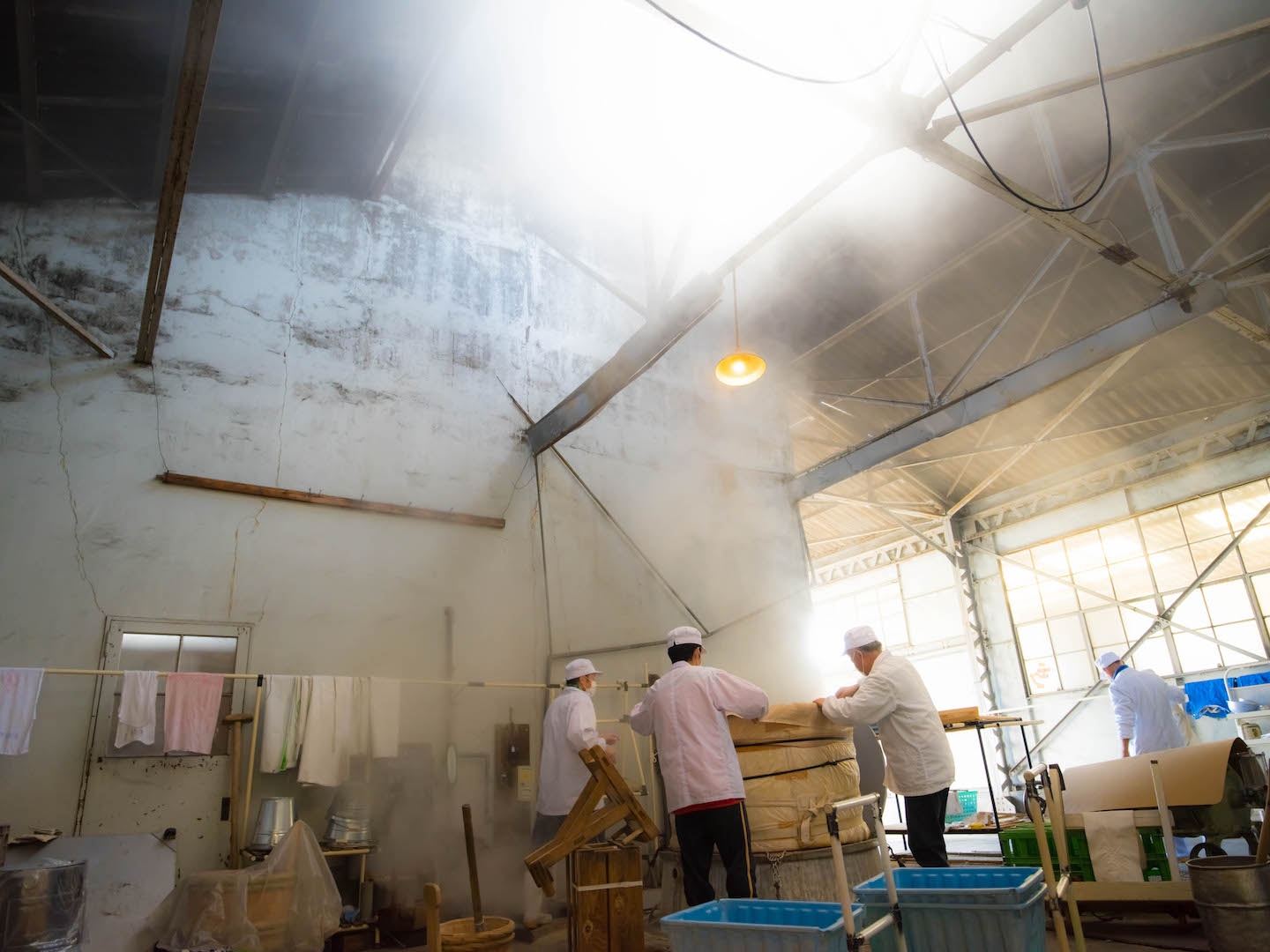
and then organizing the workflow and carrying it out as planned — arranging people, and so on. If you can't do that properly, you can't be a toji. You can't make it alone.
bien: Conversely, what's enjoyable in daily brewing?
Murase: Enjoyable conversation with the colleagues I brew with, that sort of thing.
And thinking through the various tasks.
bien: Teamwork. You value people.
Both the hard parts and the fun parts come down to people.
Murase: Yes,
I think teamwork is what matters.
I'm blessed with good people.
bien: Going forward, what do you want to convey to the public and consumers?
Murase: I want people to know that something protecting sake and tradition is nearby.
I actively welcome elementary, junior high, and high school students and the general public to tour the kura, and school town-exploration and social studies visits. In particular, I want to pass on culture unique to Japan, like koji (麹) culture.
bien: It's something you'd want carefully preserved — traditional miso, sake, and mirin too.
Murase: In Iwakura, a local sake called Muginka was made, and students from the design course at Iwakura Sogo High School designed its label,
and it sold well. This year I want to involve the community in the same way. And I'm thinking about how to convey sake to people who know nothing about it — how to explain it clearly. Children are very receptive; lately even elementary schoolers remember things from a year ago.
bien: It would be wonderful if children became interested and made brewing their future dream.
Murase: Brewing is one thing, but it's fine if they go elsewhere too — if they find making things interesting,
there are all kinds of making.
bien: I'm sure your wish to pass things on and preserve culture, as you mentioned, is steadily getting through.
I communicate sake to people overseas, and they look at it without regard to brand, asking 'What is sake?' and 'How is it made?' They see sake in its fundamental, cultural dimension, so I really feel that conveying it is important.
Murase: There's a show called 'Sakatabi' on BS, right? I watch it sometimes — growing rice within a certain radius of your own brewery,
like terroir in wine. I'd like to do something similar,
cooperating with local farmers.
Farmers come on tours wanting to see the sake made from their rice, and the exchange deepens.
bien: After hearing your story today, I felt that Kunpeki is a kuramoto that places great importance on human relationships.
Through everything from rice growing to sake making, it's because you value people that making exists.
Thank you very much.