Iwamura Jozo
"I'm hopelessly in love with the sake I make"
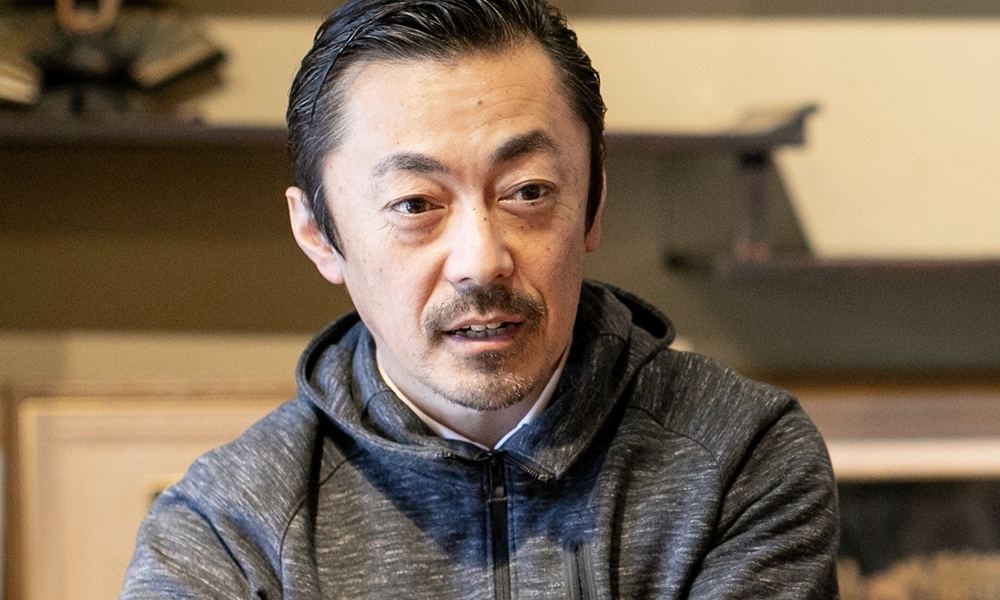
7th-generation president, Mitsuaki Watarai
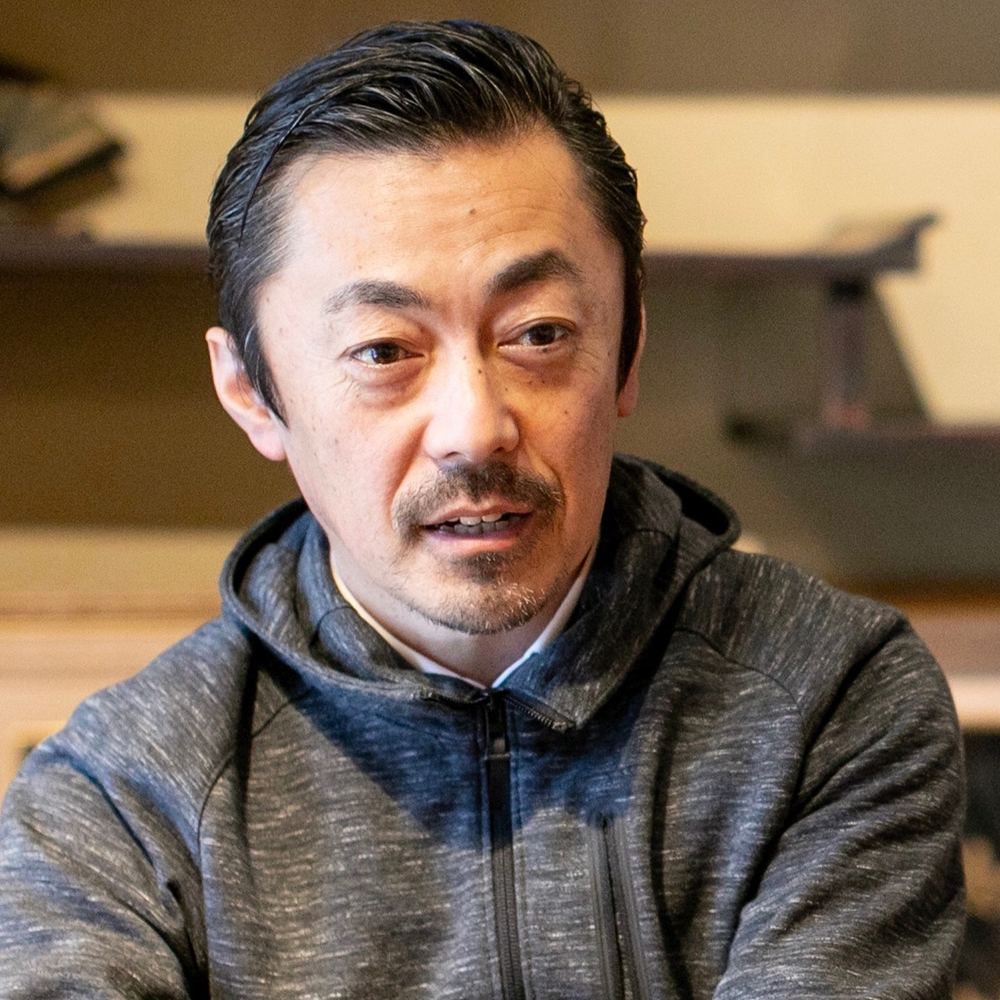
Founded in 1787.
A kura (酒蔵) in Nakatsugawa City, Gifu Prefecture, with a history spanning more than 233 years.
It sits at the foot of Iwamura Castle, the symbol of the town, built in 1185 (the Kamakura period).
The brand "Onnajoshu" was created to commemorate the 800th anniversary of the construction of Iwamura Castle.
Interviewee: President Mitsuaki Watarai (hereafter "Watarai")
Interviewer: Ayako Yoshida of bien (hereafter "bien")
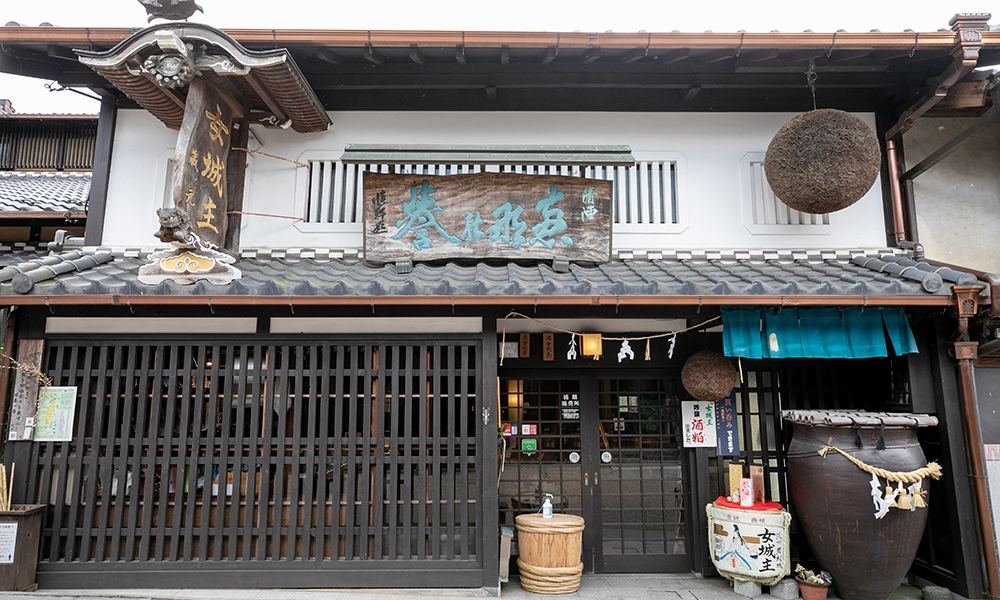
bien: A lovely castle-town streetscape, with shops and the brewery side by side.
Watarai: Yes, and thankfully we get a lot of tourists, so in-store sales are strong.
We hold an open brewery every week from February through early March each year, but this year we had to cancel the March sessions because of the novel coronavirus. Instead, we launched a stay-at-home drinking campaign with 300-yen shipping, and the response was quite strong. Since most of our customers have come into the shop in the past, I'm now thinking about how best to make use of our customer list.
bien: What kind of tourists do you mostly see?
Watarai: Mostly Japanese visitors.
There are almost no Chinese visitors; among foreigners it's mainly Westerners. They come to learn about history and old Japanese things. But since those visitors travel all over, they value the experience itself more than buying sake to take home.
It goes without saying that sake pairs with Japanese cuisine, so I enjoy proposing pairings of sake with Western ingredients. When you serve people directly, you see their reactions and get a clear sense of their tastes. Being able to recommend what we want to sell is nice, too.
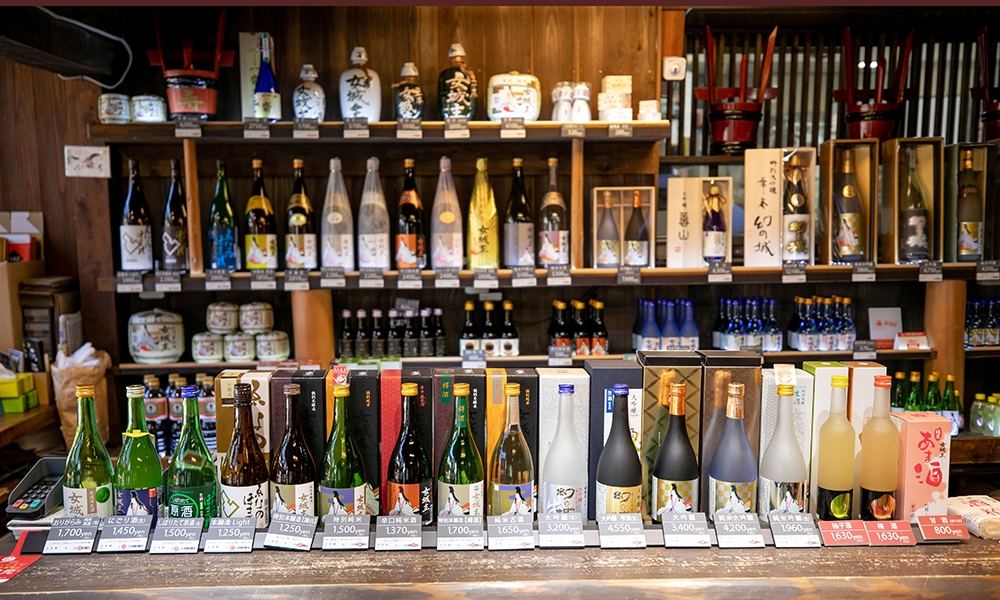
bien: Iwamura Jozo has three brands — "Onnajoshu," "Maboroshi no Shiro," and "Ena no Homare." Could you tell us how they differ?
Watarai: "Ena no Homare" is our oldest brand, going all the way back to Taisho 10 (1921).
Many breweries create a new brand when ownership changes hands, but we cherish our long-standing character and promote it strongly. We've steadfastly preserved the sweet flavor that was popular long ago, even through the era when dry, light sake was in vogue.
"Onnajoshu" was made to mark the 800th anniversary of the castle about 30 years ago, and it's the foundation of Iwamura Jozo's sake. It accounts for about 70% of our total production. "Maboroshi no Shiro" was created at nearly the same time. It's a label made with Yamada Nishiki, pursuing the ultimate flavor of a daiginjo (大吟醸)-class sake.
bien: What does Iwamura Jozo hold most dear?
Watarai: Using our local rice, Hidahomare.
For something to be called jizake (地酒, local sake), I believe the compatibility of the grain and the water matters most. It comes down to local production for local consumption.
bien: What do you feel is good about running a brewery?
Watarai: It's nice that everyone can enjoy what I've made. And sake making is simply fun.
bien: Are you personally involved in the brewing?
Watarai: I used to be, but I'm just hopelessly in love with my own sake, and I got too emotionally invested in it! The direction of the ideal flavor is mine, but I leave the actual brewing to our toji (杜氏). So now I'm only involved in planning the sake making.
bien: Do you export?
Watarai: Yes. It's fascinating how tastes differ from country to country. Europe favors koshu (古酒, aged sake) and sweet things. Asia likes dry, crisp ones. In America, aromatic junmai ginjo (純米吟醸) is popular.
bien: What are you aiming for?
Watarai: Our creed is "reiro fukuiku" (brilliance and rich fragrance).
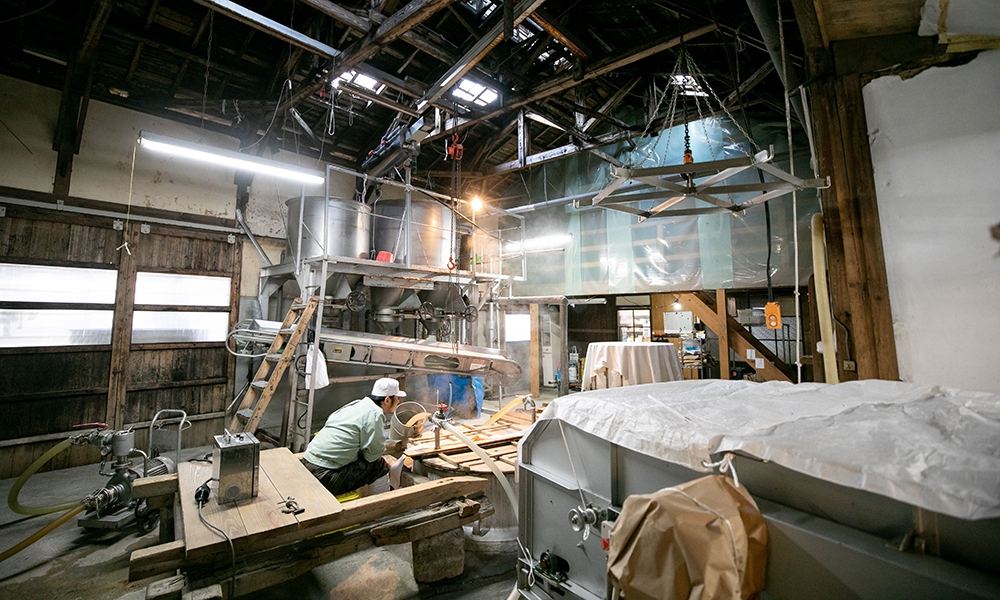
We aim for sake that shines with transparent beauty (reiro) and gives off a fine fragrance (fukuiku). Not mass production, but brewing sake that resonates with the heart down to the very last drop. And our goal is to make sake that is loved for a long time.
bien: What do you think sake is?
Watarai: Sake has a complexity and subtlety in the way it's made with koji (麹).
Above all, I think it's something delicate. Perhaps it's something only the Japanese could have created. Just as there's the word "terroir," I find the fact that it's made from the rice and water of a place to be the fascinating appeal of sake.