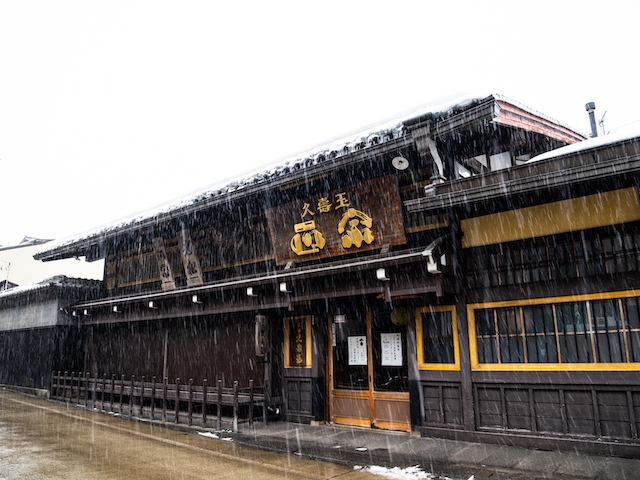
Hirase Shuzo
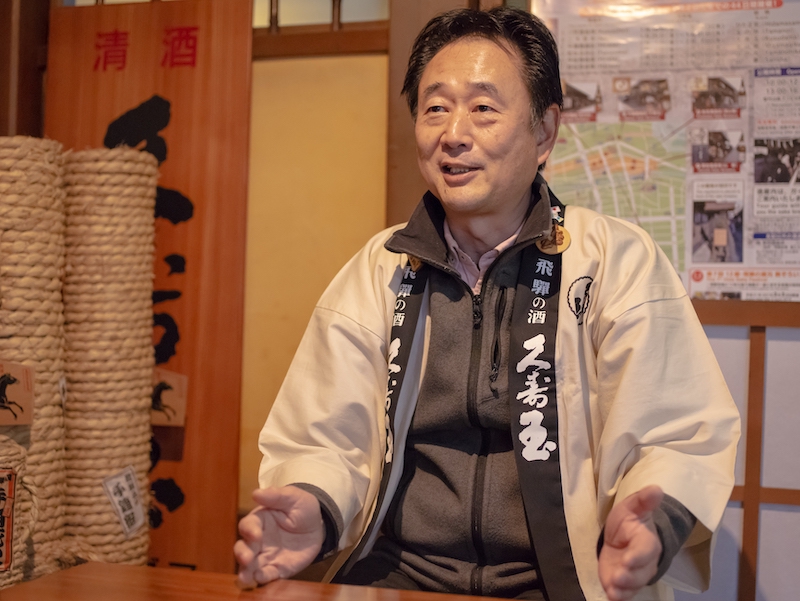
"Sake is the soul of Japan" 15th-generation President Ichibei Hirase
Founded in 1623.
With a history of 396 years (as of 2019), it is the oldest kuramoto (蔵元) in Takayama.
A renowned sake brewed with Hida's fine rice, pure soft water, and the underground water of the Northern Alps (Hida Mountains).
Interviewee: President Ichibei Hirase (hereafter Hirase)
Interviewer: bien Ayako Yoshida (hereafter bien)
bien: Mr. Ichibei Hirase, who also serves as chairman of the Hida Sake Brewers Association.
The name Ichibei is one that has been passed down through generations, isn't it.
Hirase: It isn't formally inherited now, but we carry it on rather like a stage name.
bien: Passing on a name is something you also see in Kabuki; it's a very Japanese custom.
Hirase: I was originally a mechanical engineer, but I joined the kura (酒蔵) nine years ago.
Having been in the outside world, I can look at brewing objectively.
So I'm improving the brewery while carrying on the tradition.
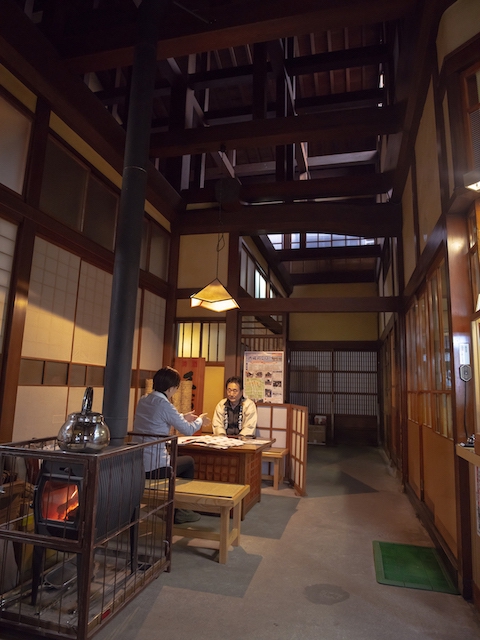
bien: I see. What do you value most in making things?
Hirase: I don't want to do business by making half-hearted things.
It's unavoidable that some years are better than others.
But I want to make good things with care, starting right from the raw materials.
To put Hida sake front and center, I insist on 100% Hida sakamai (酒米) and water,
and I value sake making that lets you truly taste the character of the region.
bien: That applies to any industry, doesn't it.
A Hida Takayama brand booklet (the "Made by Hida Takayama" certification system) was established,
so that the makers can devote themselves to their craft with pride.
That is terroir, truly.
Hirase: Exactly. I want to value local production for local consumption.
Local flavors are born out of the region's wisdom and ingenuity.
That's why customers come to enjoy the taste of Hida.
And I think that also connects to tourism.
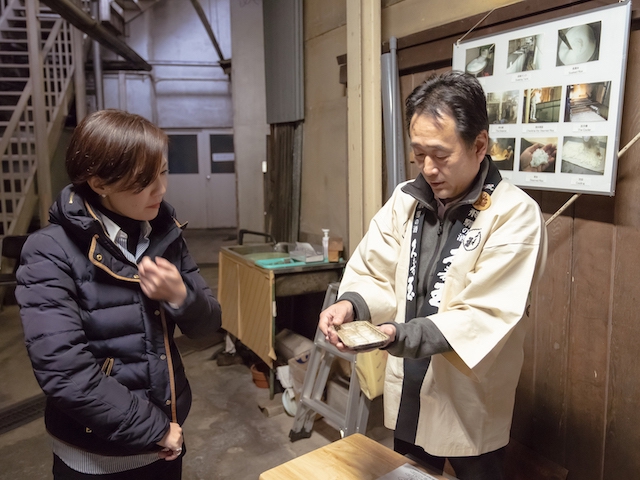
bien: Your sake uses Hida's underground water and local rice, doesn't it.
Hirase: Yes, that's right.
The underground water of the Northern Alps (Hida Mountains) is very clean and free of impurities,
and it's soft water with a hardness of 15.
So the sake turns out with a soft flavor.
And with 100% local Hidahomare rice, it's truly authentic Hida.
bien: As in the Hida Takayama brand booklet, having a clear description of these commitments
makes it much easier for consumers to understand and be convinced.
Hirase: Exactly! It's perfect for people who want to go somewhere and eat what that place produces.
The Takayama Festival is in April, so we'd love people to come and enjoy the local food and drink.
bien: As a kuramoto, what do you want to convey to consumers?
Hirase: Takayama is a gourmet town.
Because Takayama had wealthy merchants, its food culture developed.
Seafood came from Toyama, a yellowtail route developed, and fine sake was made.
In the past this area had as many as 56 kura. Takayama is a place where things don't catch on unless the flavor is recognized.
So many shops pull out. But a flavor accepted in Takayama is fresh to tourists.
Even a single dumpling is delicious. It's a culture of flavor.
In the past, Hida was a shogunate territory and outside contact was restricted.
The town that survived this economic blockade is Hida Takayama.
It's behind the times, but in a way a very human town.
Precisely because it was economically blockaded,
like Cuba, its culture developed,
and a unique character grew.
I'd love everyone to enjoy that history and culture.
bien: The Cuba analogy is very easy to understand!
What is Hirase Shuzo's selling point?
Hirase: Compared to others, we brew sake that is one or two grades higher.
It's over-spec without raising the price.
At a price consumers can easily afford,
good-quality sake is our selling point and what we aim for.
bien: So sake with great cost performance.
Overseas customers are increasing every year; how do foreign tourists react?
Hirase: We made a pointing sheet so we could respond in English, but customers from non-English-speaking countries come too,
and the sheet couldn't cover everything. In the end we just talk in Japanese and they buy — the business works!
We've crossed the language barrier! (laughs)
Some want to learn about sake making professionally — people from wineries, for instance.
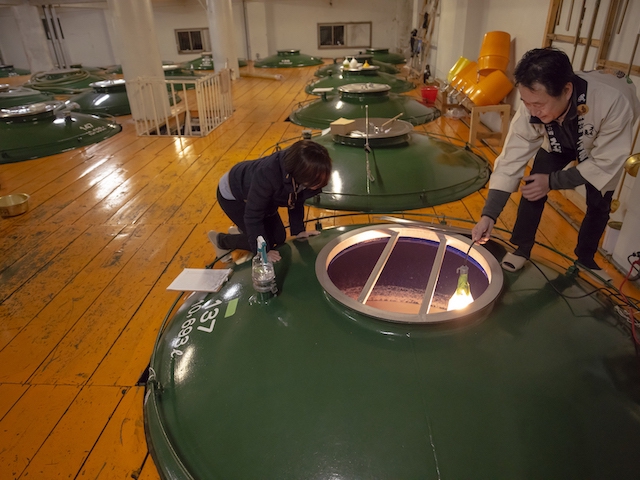
This is a production site, so it wasn't built for tours, but I'm exploring how to make the kura easy to show and understand.
bien: After actually experiencing the kura, the taste of the sake changes, doesn't it.
I think flavor is something you feel with all five senses. You can't understand it just by reading.
Hirase: Exactly right!
Flavor is built from information.
So rather than taking our sake overseas, I think of this kura itself as the international stage.
Seeing is believing, so I'd like everyone to visit the kura as much as possible.
That is my wish.
bien: Finally, what do you think sake is?
Hirase: Without sake, there would be no seasonings like mirin or vinegar.
And without such seasonings, there would be no Japanese cuisine.
Without sake, we wouldn't be Japanese.
So drinking sake as a Japanese person is a cool thing to do!
Sake is the soul of Japan.
bien: Wow, that's cool! Sake is the soul of Japan! That gave me goosebumps.
Thank you for such a moving story.
Hirase: As Takayama's oldest kura, I carry great expectations on my shoulders.
My mission is to properly pass on this culture.
In this fierce competition, I want to treasure not just business but the tradition and culture of sake.
I'm always here waiting for you at the kura.