Ena Jozo
"Sake is something that makes people happy"
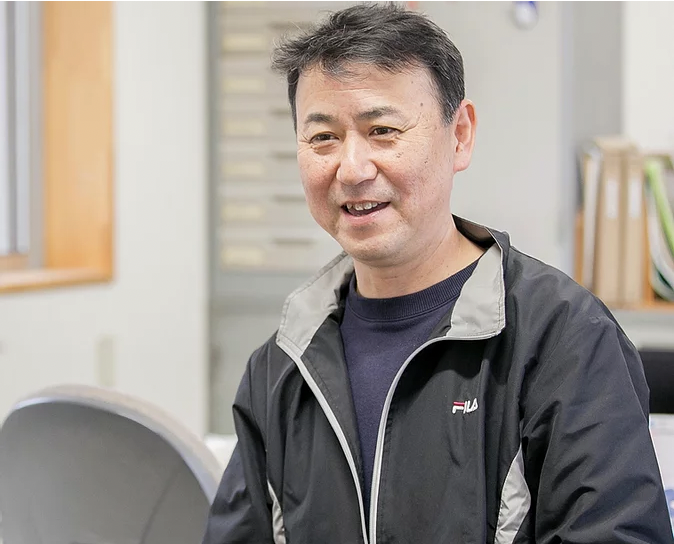
7th-generation president, Hirohiko Nagase
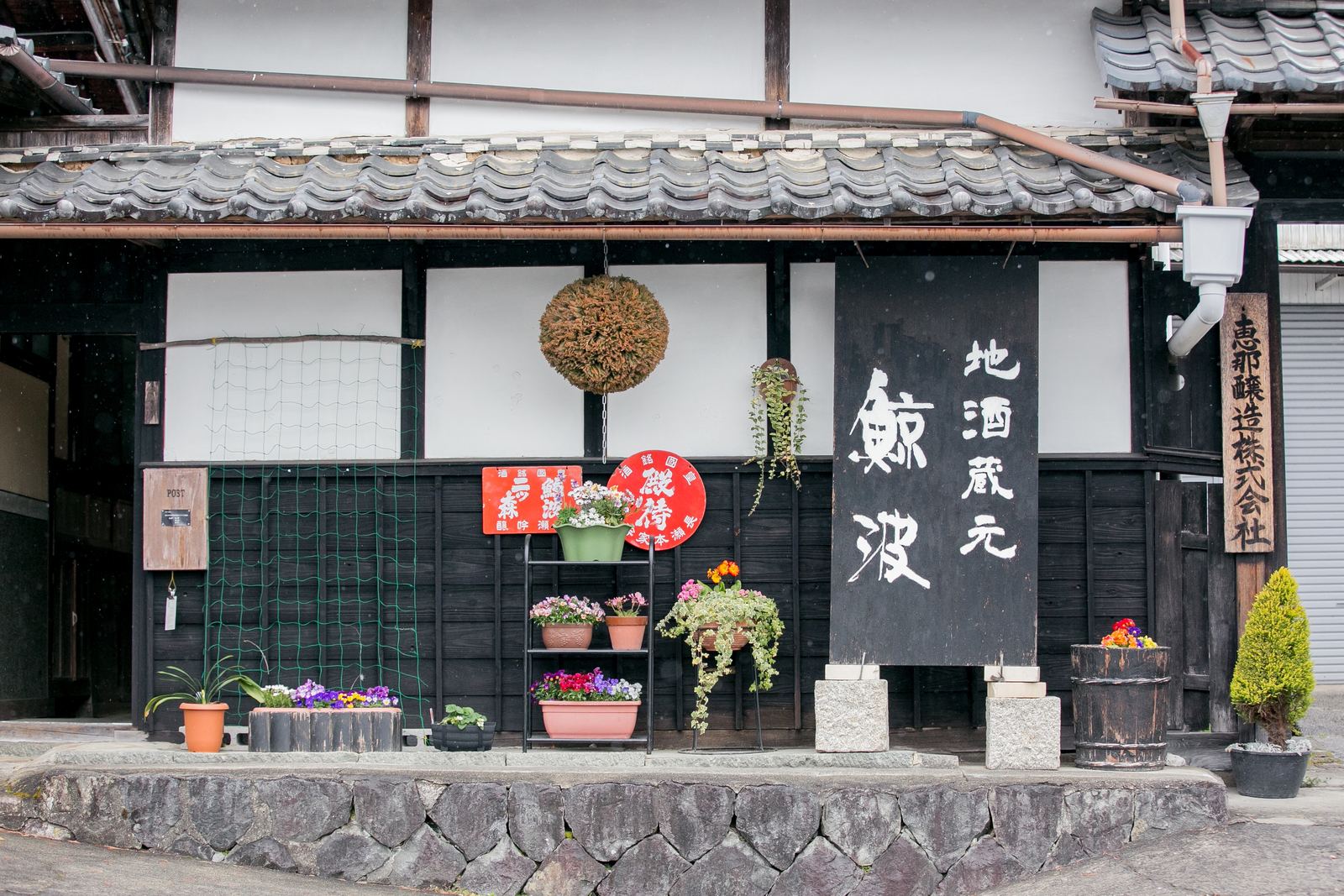
Founded in 1818.
A kura (酒蔵) standing in the Fukuoka district of Nakatsugawa City, Gifu Prefecture, which celebrated its 200th anniversary in 2018. The sake brewed amid the mountains and beautiful nature is full of gentleness.
Interviewee: President Hirohiko Nagase (hereafter "Nagase")
Interviewer: Ayako Yoshida, bien (hereafter "bien")
bien: You reached the major milestone of your 200th anniversary last year. Congratulations!
Nagase: Thank you. I'm the seventh generation, and we've been brewing for 200 years.
I have two older sisters and I'm the eldest son, so from a young age I somehow—
—grew up feeling it was only natural that I would take over.
bien: Carrying on a tradition over such a long time is truly wonderful.
By the way, what is the origin of the brand name "Kujiranami"?
Nagase: I get asked that a lot! "Why, when there's no sea here?"
The name comes from a view seen from here long ago—apparently the clouds looked like a whale.
In the first generation it was named after a mountain, but in the second generation it was changed to Kujiranami, and it's stayed that way ever since.
bien: Have you ever actually seen a view that looked like that?
Nagase: Hmm, not really (laughs).
bien: Your website says you aim for good sake—
What kind of sake do you consider good sake?
Nagase: It's about making it properly, I think.
We take care to use local ingredients.
Of course we use the local rice Hidahomare, and also Gohyakumangoku grown locally.
bien: Last year, in 2018, you won a gold prize at the shinshu (新酒, new sake) appraisal. Congratulations!
Nagase: Thank you. We hadn't made daiginjo (大吟醸) for a while, so this was our first award in twenty or thirty years.
bien: Do you feel awards like this have an impact on your name recognition?
Nagase: Well, there have been a lot more contests lately,
so it's hard to tell exactly what's having an effect,
but the shinshu appraisal is the one with the longest history in all of Japan, so I think it's highly trusted.
bien: You seem to be out doing sales a lot lately. How's the response?
Nagase: I've been going to Tokyo for about fifteen years now,
and in such an enormous market, it always makes me think about what will survive.
In Nagoya, a lot of people know the name Nakatsugawa, so we're more readily accepted.
It's easier for people to feel a connection, and I feel closer to the consumers.
bien: And the type of sake that's accepted differs by region, doesn't it?
Nagase: That's right. Some regions inevitably prioritize brands.
Within that, what should the Chubu region do? I think Chubu has its own strengths.
Central Japan, different from Kanto or Kansai.
We have Chubu Centrair International Airport too, so I want to keep that strong local pride and cherish it.
bien: Indeed! Are you considering exporting?
Nagase: Not yet. We're at capacity domestically.
Kujiranami has long been sold almost exclusively in Nakatsugawa City.
I believe sake is best enjoyed locally.
We're a small kura (酒蔵) producing just under 200 koku a year.
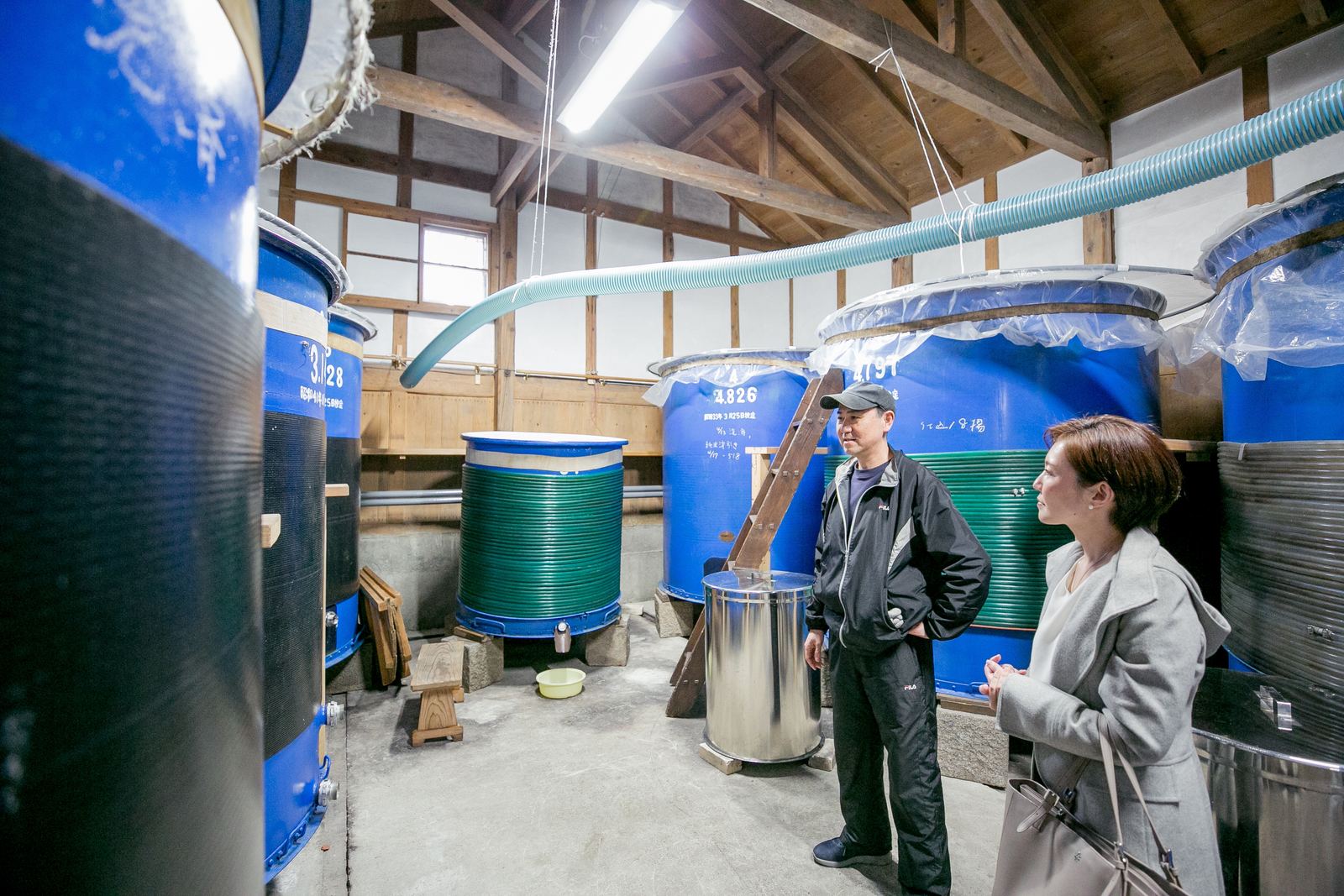
bien: I see. As a kura, what do you want to convey to the general public?
Nagase: Brewing as a culture, of course,
and also that there's a kura in a place like this—
I'd like to get that across.
bien: The air really is clean and lovely here.
What do you think sake is?
Nagase: I like sake myself, so drinking it is fun, and I think it's something that makes people happy.
Sake has no borders, and it puts people at ease.
bien: Truly borderless! No borders at all.
What do you value most in sake making?
Nagase: Making it in this place, I suppose. We use mountain spring water that flows naturally.
We're so blessed with spring water that we don't need to dig a well; it passes through the traditional gravel layers,
and we use the filtered soft water.
bien: Gravel layers! That's amazing.
How would you briefly describe the character of Kujiranami's sake?
Nagase: We don't make sharp sake. We don't make sake with pronounced acidity.
Neither too sweet nor too dry is our hallmark. Because we use soft water, the sake has a soft character.
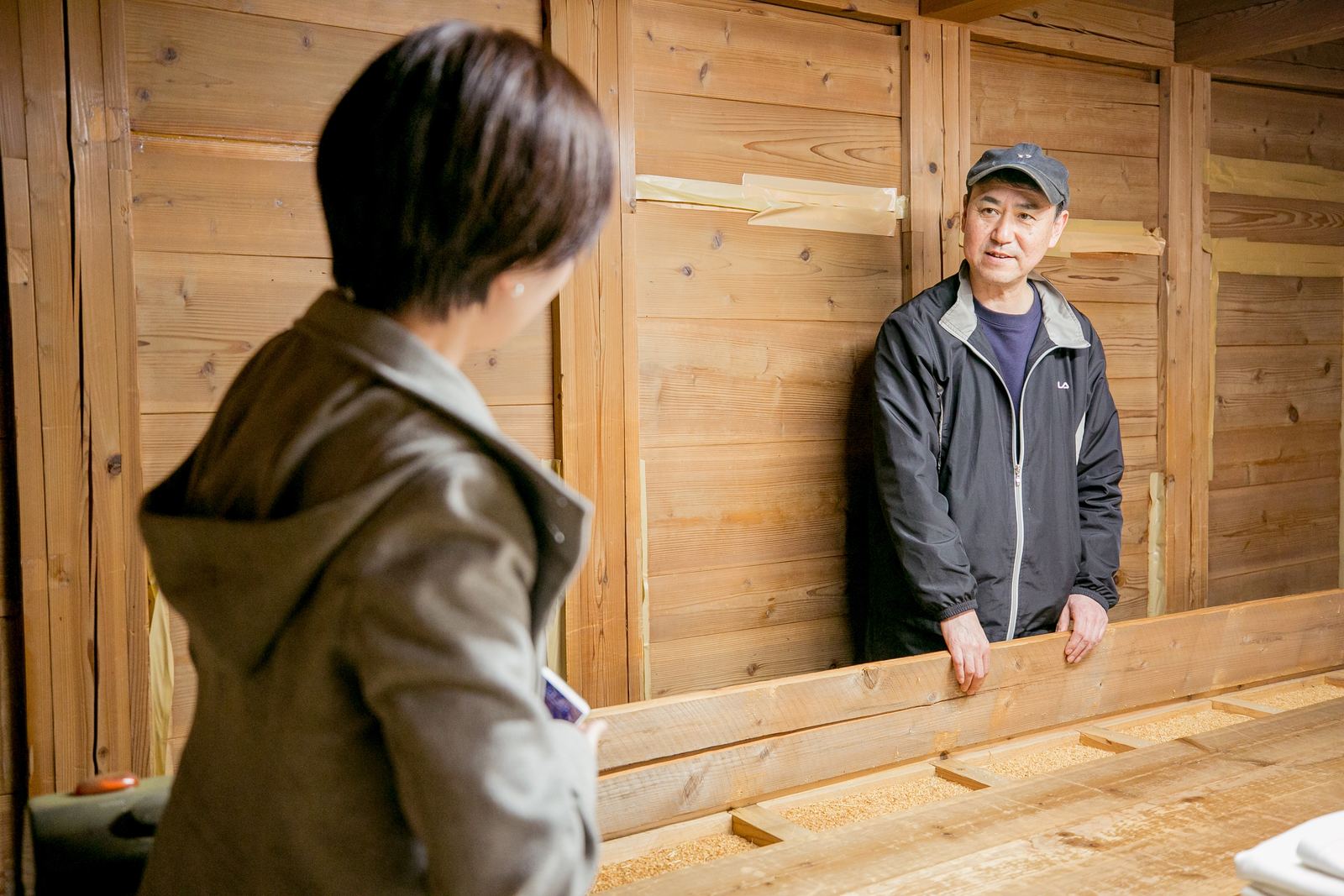
bien: Sake really reflects the brewer's personality, doesn't it!
Nagase: Unlike wine, where the grape's own flavor and the forces of nature are the main influence,
sake isn't something where the rice itself has flavor—
it's something shaped by human hands,
so the flavor really does change with the person.
bien: Do you have a vision for the future you could share?
Nagase: We grow rice on our own grounds, so I want to cherish the local area even more.
And I want people to get to know us and come visit.
Magome is nearby too, so I'd love for people to come by.
We're also planning to hold a kura open day on August 17 this year.
I plan to keep holding them regularly so people can drop by casually.