The new sake-brewing year
Hello.
This is Akari, a drinker (who longs to be a lady).
It's a season of beautiful greenery.
How are you doing??
A few years back in May I visited
genkoan in Takagamine, Kita-ku, Kyoto — here's a photo from that trip.
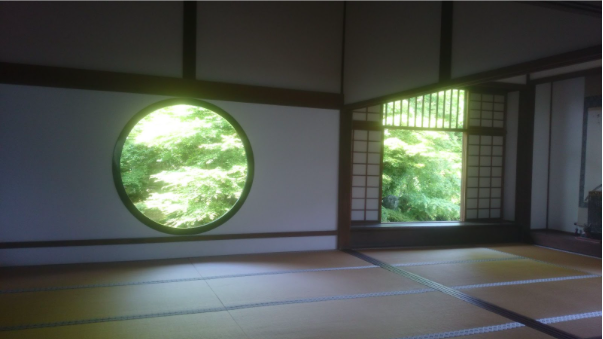
Thinking to myself, “I'd love to go again…”
I noticed the letters “BY” on the label of a sake I'd opened.
What on earth does “BY” stand for??
And so, once again!
I went to ask International Kikisake-shi Ayako Yoshida.
Akari:
What does “BY” on a sake label mean?
Ayako-san:
BY stands for “Brewery Year,” the sake brewing year.
When do you think the sake year begins?
Akari:
Of course I know that!
It's the start of the year, so it's January 1st, right?
Ayako-san:
Sorry, not quite (laughs).
The kura's New Year's Day is July 1st.
For tax-law reasons, to reduce the amount of brewing that straddles the brewing-year boundary, it's set to the month of the year
when sake making is at its lowest.
For example, up to June 30, 2021 it is labeled “20BY” or “2BY,”
and from July 1st it is labeled “21BY” or “3BY.”
Akari:
Wow, I'd never heard of that.
So “20·3” printed on the production date means it was made in March 2020?
Ayako-san:
This gets a little confusing, but the production date on sake is the date it was shipped from the kura,
or the date it was bottled.
It's not the day the sake was brewed or pressed.
If it says “20·3,” that means it was shipped in March 2020, or
bottled in March 2020.
Akari:
There are all sorts of rules about label markings, aren't there.
From now on I'll study them carefully before drinking!
Though after drinking, it might all be forgotten…
Ayako-san:
There's one thing I want you not to forget!
Akari:
What's that?
Ayako-san:
Sake labeled “namazake (生酒, unpasteurized),” “namazume-shu,” or “namachozou-shu”
should be kept refrigerated.
Ordinary sake is pasteurized twice in total after brewing — once before storage and once before shipping —
through hiire (火入れ, pasteurization).
However, “namazake” is sake shipped without any pasteurization at all.
Some of it contains gas, and both the yeast and enzymes remain.
To savor that precious freshness,
please keep it refrigerated and enjoy it soon.
“Namazume-shu” and “namachozou-shu” have both been pasteurized only once.
Once is still a delicate condition, so please refrigerate those too.
Akari:
Understood!
After all, it's a sake made with great care.
I'll refrigerate it and enjoy it deliciously.
Sake labels are fascinating, aren't they.
Thank you for the lesson ♡
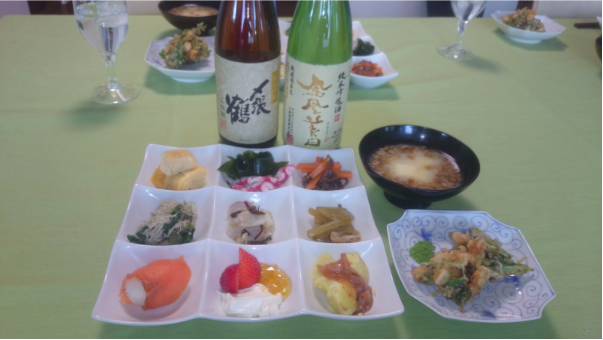
Well then, until next time!
Peacefully to one or two ichigo (一合, 180 ml) today!