Arabashiri
Hello.
This is Akari, a drinker (who aspires to be a lady).
It's April.
Congratulations to everyone who has had a company entrance ceremony, school entrance ceremony, or kindergarten entrance ceremony!
To the moms and dads who have started making packed lunches,
thank you for all your hard work!
In a new environment, are you nervous? Excited?
Let's settle in at a relaxed pace, with just the right amount of enthusiasm♪
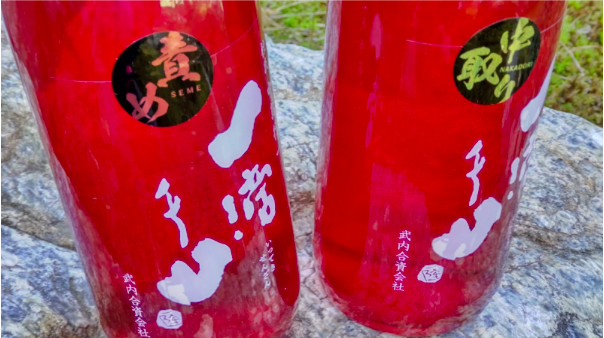
The other day I came across some sake with a label reading "arabashiri,"
and I wondered what on earth that meant...
So I went to ask Ayako Yoshida, an International Kikisake-shi (国際唎酒師).
Akari:
What does "arabashiri" mean?
Ayako:
When the ingredients of sake are fermented, a mixture of liquid and solid called moromi (もろみ) is produced.
The liquid pressed from this moromi is the sake, and the remaining solid is the sake kasu (lees).
Sake is given different names depending on when it comes out during pressing.
The first sake to come out is the one that flows out naturally just from stacking the moromi bags.
This is called "arabashiri."
It's quite a strong-sounding name, isn't it?
Literally! It's a bit rough and contains gas.
Its characteristics are a gorgeous aroma and freshness.
Akari:
So "arabashiri" is written in kanji as "荒走り."
To think it's named according to when it comes out during pressing!
How delicate.
The spirit of the Japanese, who have treasured both rice and sake...
It really moves me.
Ayako:
Next is the sake that comes out when light pressure is applied from above.
This is called "nakadori," "nakagumi," or "nakadare."
It's the most balanced and delicious part of the pressing.
This "nakadori" is often the one entered in sake competitions.
Akari:
Mmm, that sounds delicious!!
It's about time I wanted a drink.
Ayako:
And finally, strong pressure is applied to press out the last of it.
This is called "seme" or "oshikiri."
It has a higher alcohol content and a slightly rough flavor.
It's more often blended than sold on its own.
Sake normally sold on the market is a blend of these three types,
but sake bottled with only "arabashiri," only "nakadori," or only "seme"
has also come to be sold.
I think it's fun to compare them and find your favorite.
Now, here's a question!
Akari:
What! That's sudden (laughs)
Ayako:
Sake is also called "seishu." Why do you think that is?
Akari:
Because it's made with pure water? Is that it?
Ayako:
Long, long ago,
before we were even born...
the mainstream sake was a white, cloudy "dakushu" (unrefined sake).
In contrast to this cloudy sake, sake made by filtering the moromi through cloth and the like is "seishu."
Drinking it unfiltered, as is, is "doburoku."
In the old days, it seems every household brewed doburoku.
Now it's prohibited by the Liquor Tax Act!
By the way, doburoku can only be made by breweries that hold a special brewing license.
Even among the more than a thousand breweries across the country, those with a doburoku production license
are very few.
Akari:
Wow, there was so much I didn't know!
Thank you for teaching me♡
See you again!
Today too, peacefully, an ichigo or two!