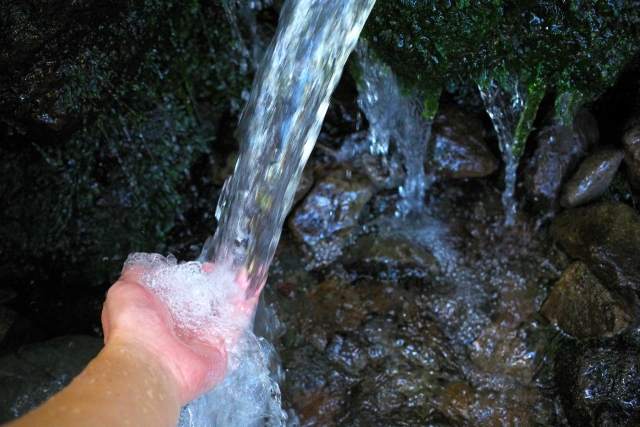
My Skin Is a Mess! How Does Water Quality Affect Sake?
Hello.
This is Ayako Yoshida of bien (美宴).
I traveled abroad for an essential errand ✈️
and I'm posting from Toronto, Canada 🇨🇦

The other day the temperature hit −19°C and an extreme cold warning was issued ❄️
Have you ever heard of an extreme cold warning??
It was news to me 👂
While taking every precaution against COVID,
I stocked up on food at the supermarket, feeling like a full-fledged local,
and I'm staying quietly in my hotel.
Then, a few days after arriving in Toronto, I noticed a problem!!
My skin had become terribly rough 😱
⚠️⚠️⚠️ Caution: photo may be unpleasant to look at ⚠️⚠️⚠️
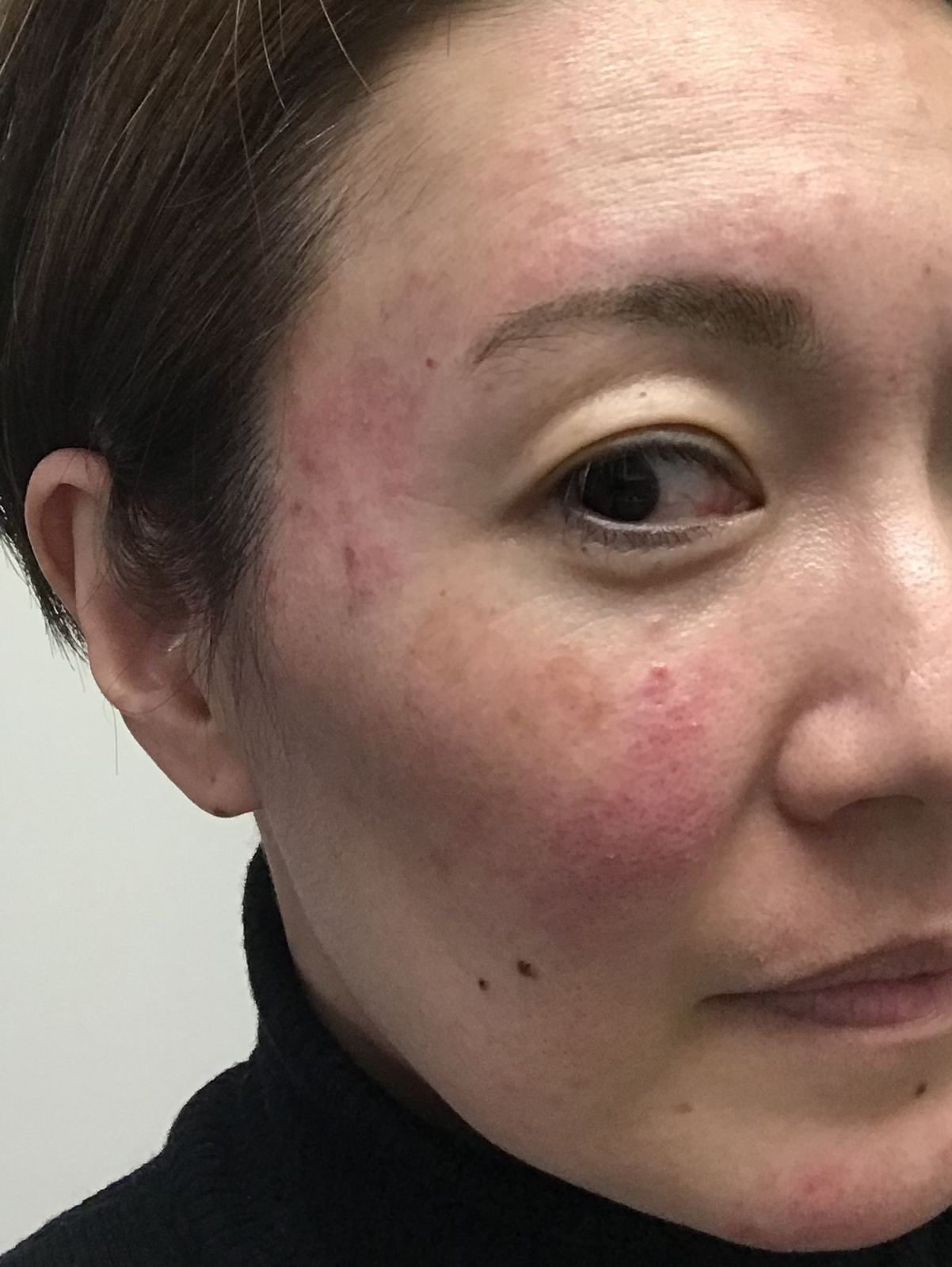
This symptom, I'm sure...
I had it when I went to Italy too, I recalled, and when I looked into it...
It's only my personal judgment, but the cause of the skin trouble
turned out, with quite high probability, to be the "water"!!
Yes—the hardness of the water.
Even within the same country, hardness varies by region,
and Toronto, Canada has hard water,
while Japan has soft water.
Italy also had hard water.
Hard water contains a lot of minerals—
it's the total of the minerals (calcium and magnesium) dissolved in one liter of water,
expressed as a number.
Japan ⇇ average 60 mg/L
Toronto, Canada ⇇ 121–142 mg/L
Milan, Italy ⇇ 270 mg/L
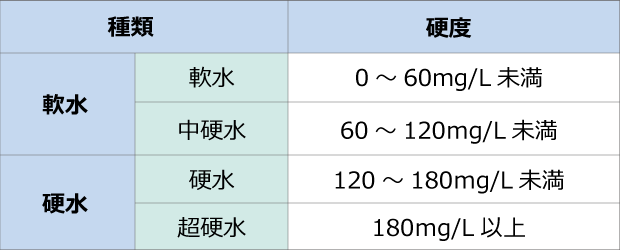
[Source] Hardness in Drinking-water | WHO
By the way, a region world-famous for its high hardness is
the home of "Contrex," which also became famous as a diet water—
the water source "Contrex Ville" near the Vosges Mountains in France, at 1468 mg/L.
So, about skin trouble caused by hardness—
some people are resistant to water quality and have no skin trouble at all.
I was more delicate than I thought 😅
I didn't even know it myself (laughs).
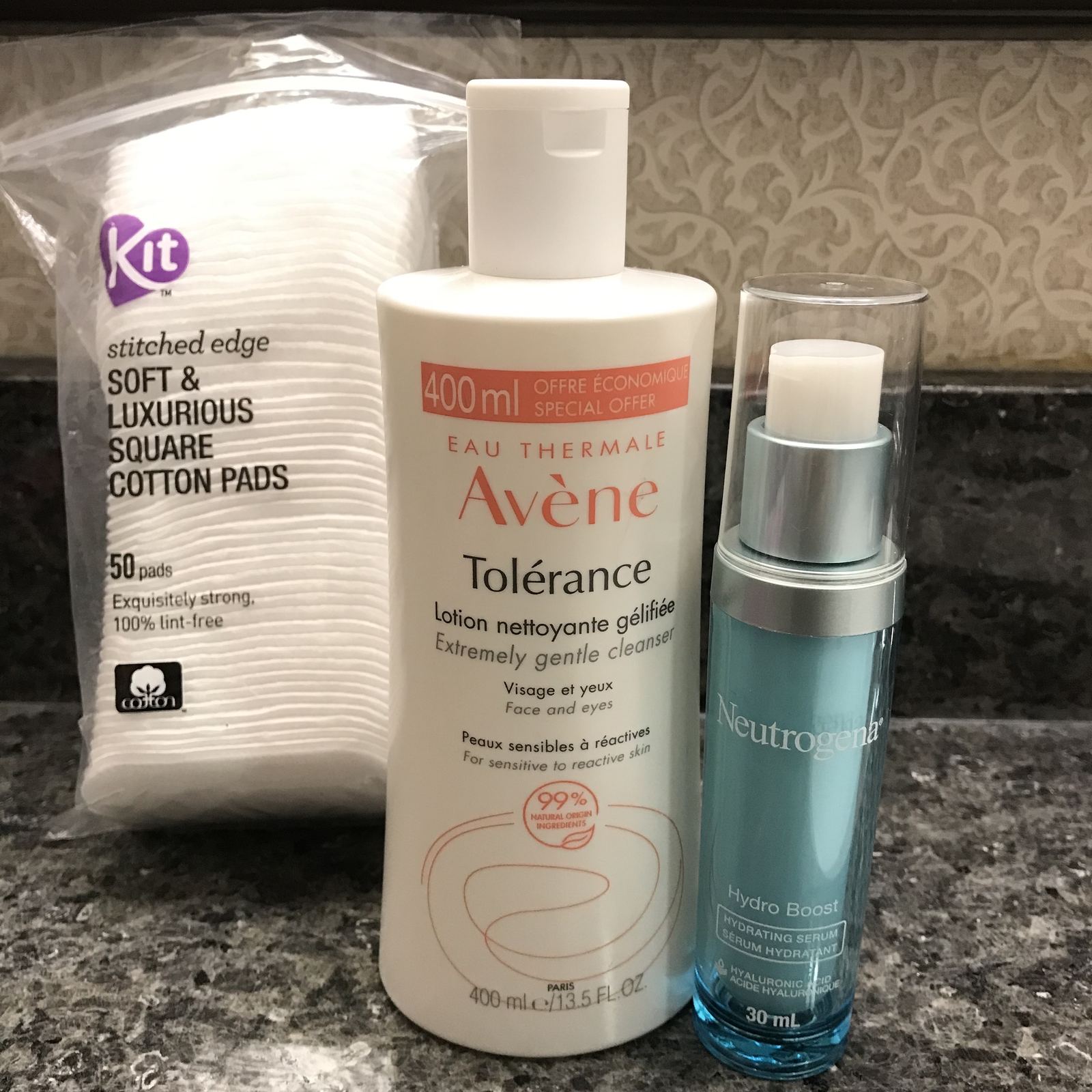
To get along better with hard water, I changed my daily skincare routine ✨
For people who get skin trouble in hard-water areas, dermatologists apparently recommend this product.
You can buy it at a regular drugstore without a prescription.
Now, at last, to the main topic! How does water quality—which can change your skin this much—affect sake making? Water makes up 80% of sake. Which water you use is an essential factor that determines the finished flavor. Even within Japan, hardness differs by region.
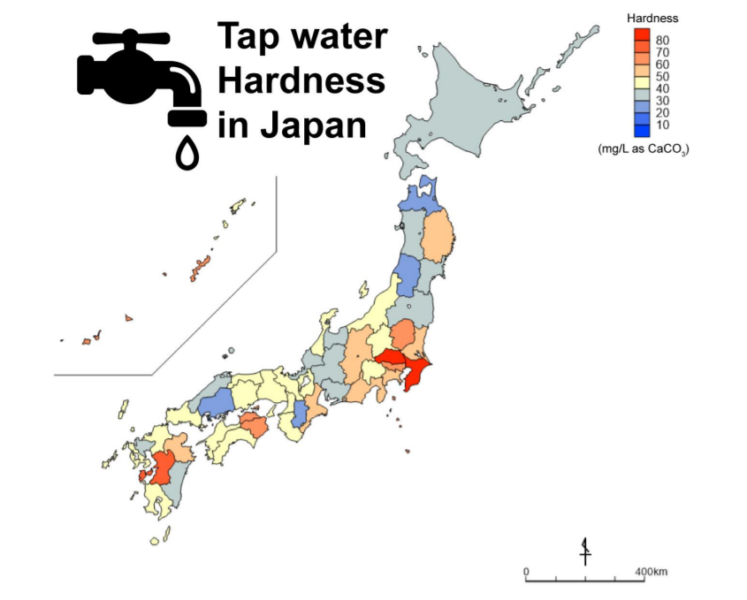
[Source] The University of Tokyo — We checked the "hardness" of your tap water
— Hardness distribution of tap water across Japan (2021)
What differences in flavor arise from differences in water?
Simply put,
sake brewed with
and sake brewed with
That's how it is.
In Nada, Hyogo Prefecture in particular, sake is made with water of 100 mg/L—among the hardest in Japan.
The hard water of Miyamizu in particular is rich in potassium, calcium, phosphorus, and more,
which promotes the growth of the koji (麹) and yeast.
Moreover, because it contains almost no iron—the great enemy of sake making that robs the rice of its flavor and aroma—
it is the ideal water for producing a distinctive crispness.
Conversely, sake made in soft-water regions such as with the Gokosui water of Fushimi, Kyoto,
turns out very gentle and delicate in flavor.
That's because it has few minerals.
It becomes a soft, mellow flavor.
Sake made with soft water is called onnazake (女酒, "feminine sake")
and sake made with hard water is called otokozake (男酒, "masculine sake").
That's what they're called.
In this way, the sake you casually drink and think "Delicious! This is my type!"
might turn out to be soft-water or hard-water—you may make such a discovery.
Your preferred type might come from the water quality—
why not look back over your memories once more? 😊
By the way, as long as it goes deliciously with the meal,
I love both crisp hard-water sake and gentle soft-water sake ❣️
Thinking about it from the water quality this way,
Japan really is a land suited to making delicious sake 🗾
When I come abroad, I'm reminded anew of Japan's charms that we take for granted at home.
Sake was born from the blessings of water, rice, and koji mold.
I'm grateful to Japan's environment and land, which gave rise to delicious sake!