2nd: Harada Shuzo Goshi Kaisha (Higashiura Town, Chita District, Aichi Prefecture)
President Akihiro Harada "To make sake shine, you need presentation!"
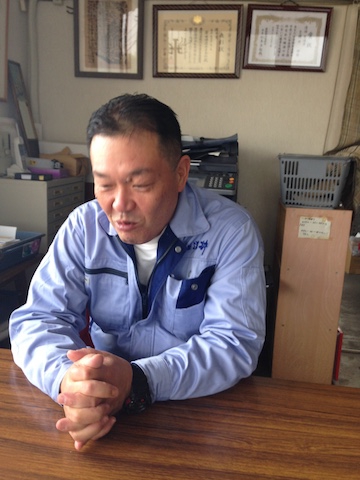
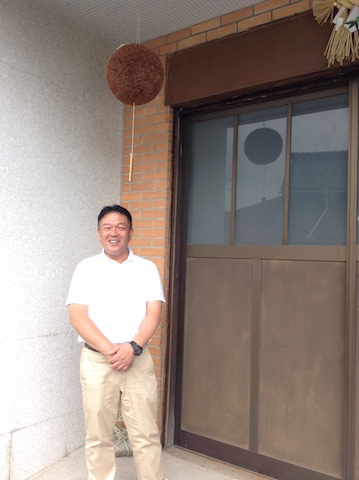
A kura that has continued since 1855 (the second year of the Ansei era) in Higashiura, the birthplace of Odai no Kata, mother of Tokugawa Ieyasu.
The website is here
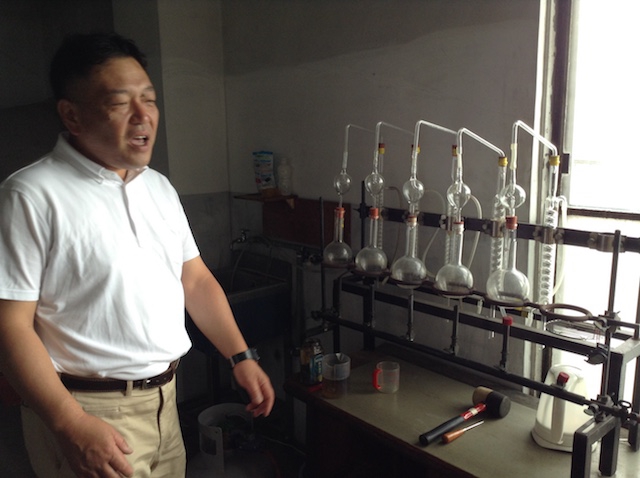
They steam the rice in a traditional cedar koshiki (steamer), let the moromi (もろみ) mature, and press it using the traditional "fune-shibori" method, stacking the sake bags—a heartfelt, handcrafted approach carried out consistently from start to finish.
We spoke with the fourth-generation Akihiro Harada.
Interviewee: President Akihiro Harada (hereafter, Harada)
Interviewer: bien's Ayako Yoshida (hereafter, bien)
bien: As a sake brewery, what do you want to convey to the general public?
Harada: First and foremost, it's that sake is delicious to drink,
but there are all kinds of alcohol in the world, and there are different occasions for drinking, right? Sometimes you drink at a happy occasion when something good has happened, and sometimes you drink when you're irritated. Among all the alcoholic drinks out there, there's nothing that only sake can do,
but I'd love to use sake to create the experience of people gathering, enjoying themselves, and having a good time over a meal.
bien: Presentation, then.
Harada: When you arrive, you have a beer—"let's have a quick beer," right!
If you ask whether it's actually delicious, I'm not so sure.
When you're tired from work, or when it's hot, there's a refreshing feeling, right? Even so, beer does a fine job of setting the scene. With sake, there aren't many occasions like that—that may be our own lack of effort, and it's something to reflect on.
I want to convey that gathering and drinking together is fun.
bien: How would you like sake to evolve going forward?
Harada: It's a technique we Japanese have built up over the ages, and rice is something suited to Japan's climate and palate, passed down from our predecessors—
so I want to share it with people in countries all over the world.
I want to convey Japan's good things.
bien: For Japan as a whole. That's wonderful.
What do you think sake is?
Harada: It's one form of communication that connects people.
bien: It really does feel like the "wa" that binds people together, and the "wa" of Japan. What do you think "wa" is?
Harada: There's the harmony among people, and there's also the harmony that's been in Japan since ancient times.
bien: In a society that's becoming increasingly modern, how do you think we should balance that with Japan's traditional harmony?
Harada: As a sake brewer, we're in an old industry. We'll mark 161 years in business this year, and within the sake industry
we're by no means among the oldest, but including other industries it becomes quite an old industry, doesn't it? Kuramoto often use words like "tradition" and "prestige." But when you ask what those really mean, simply clinging to the old ways won't last.
I think you have to keep what's good while building new things on top of it, or you can't survive for long.
For a time, we also worked as a subcontractor for a major brewer. Some people say we went downhill because we brewed for a big company. But I think it was an unavoidable part of the times. Back then, machinery wasn't as advanced as it is now, so the big companies couldn't mass-produce. To mass-produce, they could only increase buildings and staff. It was terribly inefficient, so they outsourced. Then came the postwar high-growth period—Tokyo Tower and all that—a construction boom, right? People doing physical labor day and night would drink after work, and that's how this country developed. The industry itself was growing, so I don't deny it. Rice wasn't as abundant as it is now, so there was innovation in how to make even one more drop of sake from a small amount of rice. That was its own kind of progress. Still, in terms of innovating our own place, I feel we may have fallen a bit behind.
That era certainly existed. Now, since we're in a local tourist area, it's time to brew sake that can compete under our own brand and offer it to customers at home and abroad.
Our theme is to get Aichi's sake out there more and more.
Where is the reliable domestic audience for sake? First, foreigners coming from overseas. Also, compared to the past, the number of women drinking has increased. Women enjoy sake while eating good food. We have to run our shop so that such people will gather.
bien: What do you think of the Shoryudo initiative, where nine prefectures in the Chubu region are working together?
Harada: It's an initiative unlike anything before,
aimed at welcoming tourists from overseas.
I think it's excellent that the kuramoto, the tourism association, and the commerce and industry promotion association are working as a set. The idea that the town has to respond, that it would be good to do so, has begun to take hold.
bien: It's the same with Shoryudo,
but Japanese people themselves often don't know about Japan.
Even when foreigners come aiming for "Shoryudo," asking where it is, the response is often "What's Shoryudo?"
I mentioned this in a talk, but there's a question from foreigners: why don't Japanese people drink much sake? What do you think?
In the end, if Japanese people don't know Shoryudo and don't drink sake, it won't spread from the source, and we can't convey how wonderful it is.
Harada: We have to build that image.
We tend to have the image that the French drink nothing but wine.
bien: When you travel to Germany, you see Germans drinking nothing but beer, right?
Thinking how cool that is, Japanese people get influenced by it in turn.
Harada: We have to make visitors think it's cool. That requires presentation.
bien: Wherever you go, people see Japanese drinking nothing but champagne and wine, and ask, "Where and who drinks sake?"
In that state, even if we work hard to spread sake, we can't show it. If people aren't actually drinking it, it won't get across.
Harada: What's more, when foreigners come to Japan, even at Japanese restaurants in tourist areas,
and around Kyoto, French restaurants are increasing, aren't they? Their wine selection is quite good. They do a fine job appealing to Japanese customers, but to the throngs of foreigners—a French person wouldn't come all the way to Japan to drink wine that costs several times what it does in France.
bien: That's absolutely true.
Since they've come all this way, they should have something truly good. Foreigners are now starting to visit traditional izakaya too, so I'd really like them to be particular about sake as well.
Harada: Also, foreigners do their research well.
bien: They really do.
I feel the Japanese attitude toward sake is also changing somewhat from the flow of the past several hundred years.
Harada: I often say it myself—the seed has finally sprouted!
Until now there was no information coming from overseas; it was an incredibly narrow, domestic-only world.
We won a bronze at the IWC, and now I want to aim higher—silver, then gold.
It has weak appeal to the general public, but strong appeal to buyers.
bien: While cherishing your existing fans, I too want to help spread the word.
Thank you very much.
The interview with toji Imaizumi is here